Learn

Notes for the people who read the COA.

What a formulator, QA lead or procurement manager needs in order to judge whether a cordyceps supplier is worth a first order. Farmologic is pre-harvest; this is guidance for assessing any supplier, us included.

Actives

What cordycepin actually is

Cordycepin is 3′-deoxyadenosine, a nucleoside almost identical to adenosine but missing one hydroxyl group. That single difference is why it is of interest.

Source: PubChem CID 6303, US National Library of Medicine.

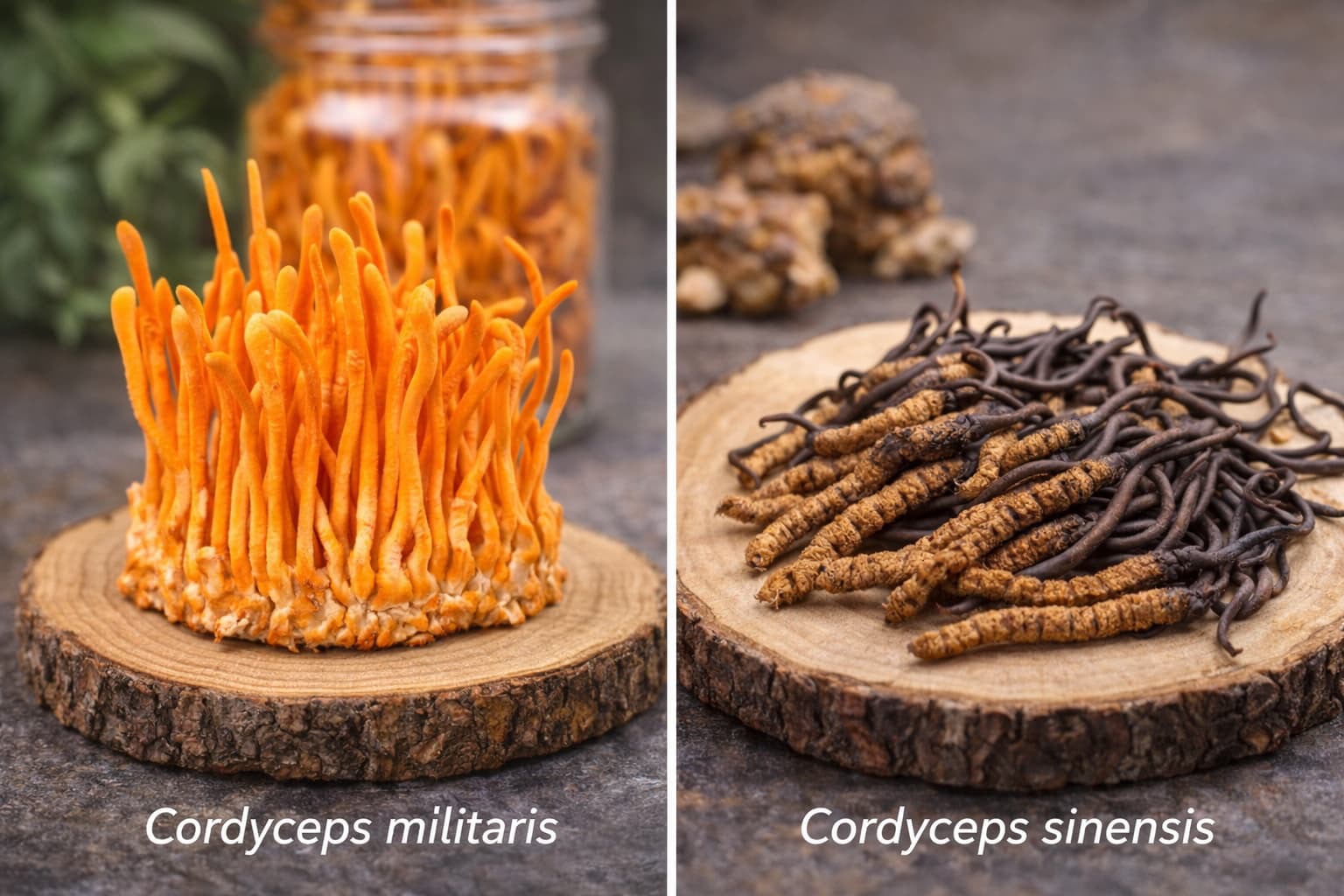
The commercial point: Cordyceps militaris, the orange cultivated species, produces cordycepin in its fruiting body and can be grown to a specification. Ophiocordyceps sinensis, the wild Himalayan species, is harder to source and to identify with confidence. If your label claim depends on cordycepin, C. militaris lets you stand behind the number.

Species names per Species Fungorum. O. sinensis was formerly placed in Cordyceps, which is why older paperwork still reads C. sinensis.

Content is not fixed. It varies with strain, substrate, conditions and harvest timing, which is why a headline figure means less than a result measured on your batch.

We publish no cordycepin figure of our own: Farmologic is pre-harvest and has no assayed batch to report.

What to ask for: cordycepin as % w/w, assayed by HPLC, on the specific batch you are buying. Adenosine reported alongside it. Anything expressed only as “polysaccharides” or “beta-glucans” is measuring something else entirely. Useful, but not cordycepin.
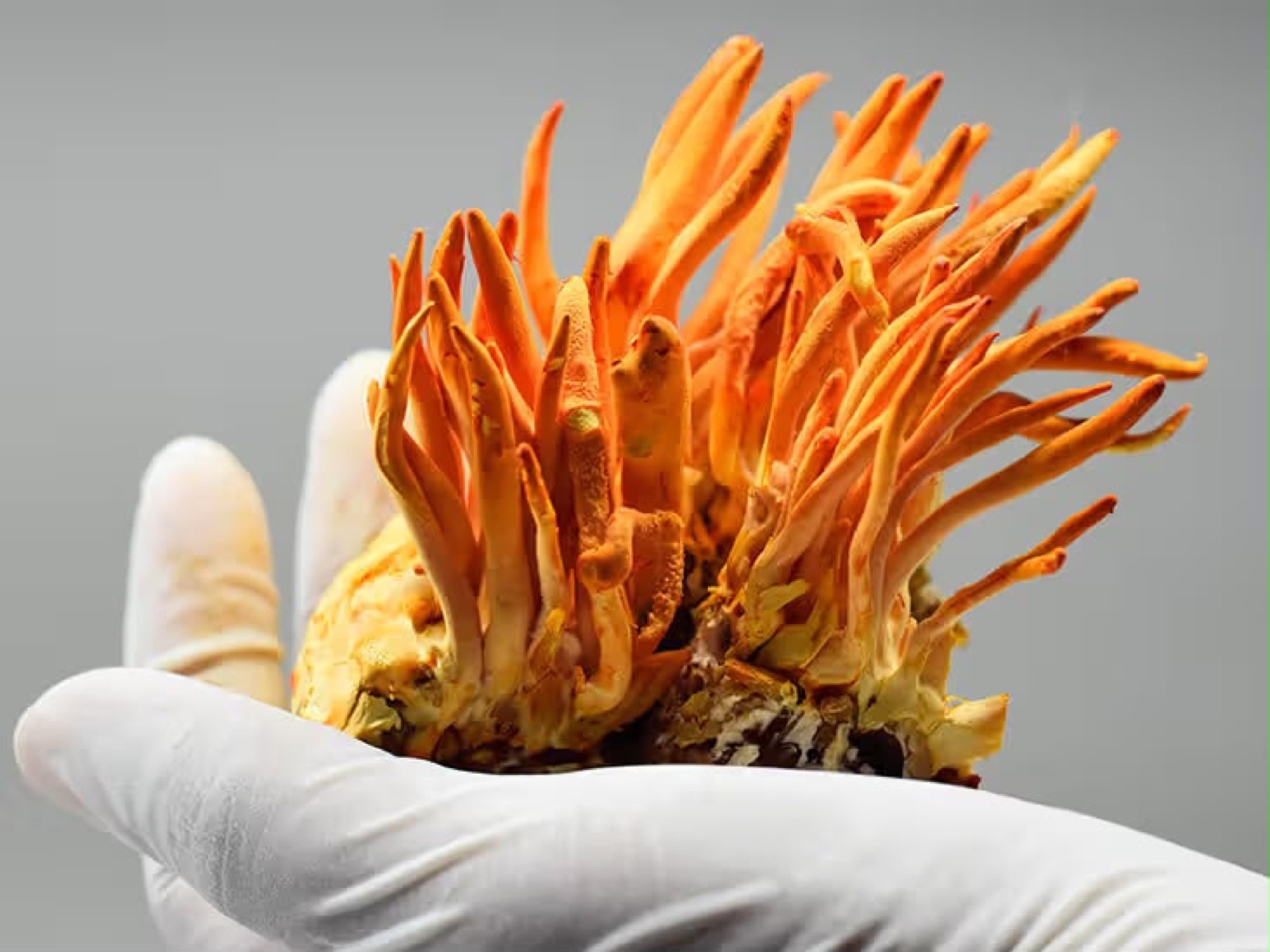
A cluster of Cordyceps militaris fruiting bodies held in a gloved hand
Cordyceps militaris fruiting body Illustrative, not Farmologic material
The number that matters is the one on your batch,
not the one in the brochure.
Farmologic
Cultivation

Indoor-grown versus wild-collected

There is a romantic argument that wild-collected cordyceps must be superior. In a supply contract, it falls apart quickly.

Wild material carries the conditions it grew in: altitude, season, host, the collector's handling, the length of the trade chain. Across a chain that long, traceability is hard to establish.

Indoor cultivation replaces those unknowns with parameters. Strain documented. Substrate built to a recipe from inputs traced to lot. Temperature, humidity, air and light held to set points and logged. Harvest at a defined maturity, not whenever a collector reached the slope.

This is not a compromise on wild material. It is what lets a buyer get the same result twice, and it means supply does not depend on wild collection, which matters if sustainability is in your brand story.

The trade-off: indoor cultivation costs more than collection. You are paying for control. If your formulation does not need it, you do not need us.

Cultivated Cordyceps militaris beside wild-collected Ophiocordyceps sinensis
Cultivated C. militaris, left, and wild-collected Ophiocordyceps sinensis, right. The image labels the latter by its former name. Illustrative, not Farmologic material
Quality

How to read a cordyceps COA

A certificate of analysis is a claim about one batch, made by whoever tested it. Most of the value is in checking that both are what you assume.

  1. Whose laboratory?

    In-house or independent? An independent laboratory is a different proposition from a supplier's own bench, and the report should name it.

  2. Which batch, which date?

    The batch number must match the material in front of you, and the date must be recent. A generic “typical analysis” is not a COA.

  3. What part of the organism?

    Fruiting body or mycelium on grain? Different materials, and only one supports a fruiting-body label claim. Mycelium on grain ships with its substrate.

  4. Cordycepin, and by what method?

    HPLC with a stated result as % w/w. If the certificate lists only polysaccharides or beta-glucans, cordycepin was never measured.

  5. Safety panel complete?

    Heavy metals by ICP-MS, total plate count, yeast and mould, E. coli, Salmonella, and pesticide residue. With limits stated, not just “complies”.

  6. Moisture and ash

    Unremarkable lines, worth reading. Moisture is the water left in the material; ash is the total inorganic residue.

Three questions for any supplier
  1. Can I see the certificates for your last three batches, not a typical analysis?
  2. What is your contamination rate, and what happens to a failed batch?
  3. If a batch comes back out of specification, who bears it, and will you tell me before you ship?
First harvest

Put these questions to us.

We would rather answer a hard specification question now than a complaint later.

Register interest